20+ Self-Regulation Strategies & Activities for Kids (PK-12)

Self-regulation helps students manage their emotions, thoughts, and behaviors. It’s what lets a child take a breath instead of yelling, or stick with a hard task instead of giving up. This guide covers self-regulation strategies for kids, examples by age, and 20+ free activities for PK-12.
Download 20+ Self-Regulation Activities for PK-12
No-prep tools to teach students how to stay calm, make thoughtful choices, and build emotional awareness.
What Is Self-Regulation?
Self-regulation is a foundational skill that helps children—and adults—manage their emotions, behaviors, and thoughts so they can respond to life’s challenges in positive and productive ways. It’s what allows a child to pause and take a deep breath before reacting in anger, wait patiently for their turn during a game, or keep trying when faced with a difficult task.
Far from simply “self-control,” self-regulation is about understanding and managing internal experiences in a way that aligns with personal goals and social expectations. It’s a dynamic process that involves:
- Emotional regulation — recognizing, expressing, and modulating feelings like frustration, excitement, or anxiety.
- Behavioral regulation — thinking before acting, resisting impulses, and choosing appropriate responses.
- Cognitive regulation (or executive functioning) — planning ahead, problem-solving, staying flexible, and reflecting on actions.
Self-regulation skills begin developing in early childhood and continue to mature through adolescence and into young adulthood. These abilities don’t emerge in isolation; they are shaped by a child’s relationships, environment, and experiences. Adults—whether parents, caregivers, or teachers—play a critical role in this development by providing co-regulation: modeling, guiding, and supporting children as they learn to navigate their emotions and behaviors.
Importantly, self-regulation is teachable. With the right strategies and support, every child can strengthen their ability to manage feelings, stay focused, and act in ways that help them succeed socially and academically.
Self-Regulation Examples by Age
Self-regulation looks different at every age. Here’s what it can look like as students grow, from the first days of preschool through high school.
Preschool (Pre-K and Kindergarten)
Young children are just learning to notice big feelings and wait their turn. At this age, self-regulation often looks like:
- Taking a deep breath with an adult’s help when frustrated
- Waiting for a turn on the slide instead of pushing ahead
- Saying “I’m mad” instead of hitting
- Going to a calm-down spot when prompted
Elementary School
Students start using strategies with less adult support. In the elementary years, you might see:
- Raising a hand and waiting instead of blurting out
- Counting to ten or squeezing a stress ball when upset
- Getting back to work after a movement break
- Accepting a loss in a game without a meltdown
Middle School
Social pressure rises, and so does the need for flexible strategies. For middle schoolers, self-regulation can look like:
- Pausing before responding to a frustrating message from a friend
- Noticing stress signals before a test and using a calming strategy
- Breaking a big assignment into smaller steps
- Walking away from a conflict instead of escalating it
High School
Teens apply self-regulation to bigger goals and more independence. Common examples include:
- Making a plan after a bad grade instead of giving up
- Putting the phone away to stay focused while studying
- Disagreeing respectfully in a heated discussion
- Using positive self-talk before a presentation or job interview
Each stage builds on the one before it. A preschooler who learns to take a breath becomes a teen who can pause before a hard conversation. That’s why self-regulation is worth teaching early, and often.
Why Is Self-Regulation Important?
Strong self-regulation skills help students thrive in school and beyond. When kids can manage their emotions and behaviors, they’re better able to:
- Build positive relationships with peers and adults.
- Handle everyday stressors, from waiting in line to tackling a tricky math problem.
- Stay engaged and focused in the classroom.
- Adapt to new situations and recover from setbacks.
Self-Regulation Strategies for Kids
These student self-regulation strategies work best when you teach them before kids need them.
Body and Breathing Techniques
1. Deep breathing. Slow belly breaths calm the body fast, so practice them daily.
2. Grounding. Name five things you see, four you hear, and three you feel.
3. Movement breaks. Stretches, chair yoga, or quick mindfulness activities help students reset.
Environment and Routine Strategies
4. A calm-down space. A calming corner with fidgets and visuals gives students a place to reset.
5. Visual supports and transition warnings. Schedules, timers, and a five-minute heads-up make changes predictable.
6. Daily check-ins. A quick feelings check each morning builds the habit of noticing emotions early.
Emotional Awareness Techniques
7. Validate every feeling. “It’s okay to feel mad. It’s not okay to hurt someone.”
8. Build emotional vocabulary. Move from happy, sad, and mad to words like overwhelmed and embarrassed.
9. Positive self-talk. Phrases like “I can pause” give students something to say in hard moments.
Practice and Independence
10. Model it out loud. “I’m frustrated, so I’m taking a deep breath.”
11. Role-play tricky moments. Practice losing a game or waiting in line before it happens for real.
12. Self-regulation games. Stop-and-go games like Selby Says build impulse control.
13. A personal toolbox. Introduce one tool a week and let students keep what works.
14. Reflection and repair. After a hard moment, talk through what happened and what to try next.
15. Co-regulation to self-regulation. Guide each step at first, then pull back prompts over time.
Self-Regulation and Neurodivergent Learners
Neurodivergent students benefit from the same strategies. They may need more flexibility, choice, and time.
1. Offer choices. Let students try different sensory tools, breaks, or communication supports, and keep what works.
2. Allow more practice time. Use co-regulation and step-by-step modeling while skills build.
3. Keep routines predictable but flexible. Adjust pacing, transitions, or task demands when needed.
4. Lead with respect. Students use strategies more when they feel safe and understood.
For students with ADHD, keep strategies short and physical. Movement breaks, visual timers, and breaking tasks into small steps tend to work best.
20+ Self-Regulation Activities for PK-12 Students
Download 20+ Self-Regulation Activities for PK-12
No-prep tools to teach students how to stay calm, make thoughtful choices, and build emotional awareness.
Self-Regulation Activities for Pre-K and Kindergarten
Taking Breaks

This printable activity introduces young children to the idea of taking a break as a positive way to stay calm when big feelings arise. It helps students recognize early signs of frustration or overstimulation and choose to pause before reacting.
How to use it: Use during group lessons or as part of your classroom calm-down routine. Guide students in practicing break-taking and reinforce it throughout the day with visual cues.
My Worried Toolbox

This printable resource helps young learners build a personalized set of calming strategies for moments when they feel worried. With visual icons and simple language, it supports emotional awareness and choice-making.
How to use it: Introduce during small groups or class meetings. Encourage students to personalize their toolboxes and practice strategies like deep breathing, hugging a soft toy, or using positive self-talk.
My Calming Toolbox

This no-prep resource invites students to explore a variety of age-appropriate calming strategies through visuals and hands-on practice. It encourages children to select and personalize tools that help them manage strong feelings.
How to use it: Use during social skills lessons or as part of setting up a classroom calm-down corner. Students can color, cut, and assemble their toolbox, then use it as a reference during the day.
Switching Tracks Goal Poster

This visual tool supports smooth transitions by guiding students through stopping one activity and starting another. It uses simple steps and images to help children practice flexibility during daily changes.
How to use it: Display the poster in the classroom and refer to it during transitions. Model the steps and prompt students to follow along as part of your transition routines.
I Can Handle Change

This printable helps children develop resilience during unexpected changes in routine. It teaches students to notice their feelings, use self-talk, and choose a coping strategy when plans change.
How to use it: Incorporate into lessons about transitions. Invite students to reflect on times they handled change and use the printable as a tool for group or individual practice.
How I Keep Self-Control

This interactive sequencing activity teaches children the steps of using self-control through visual cards. It helps students internalize the process of pausing, thinking, and choosing positive actions.
How to use it: Use during small groups or centers. Guide students in sequencing the steps and practice with role-plays to apply the concept in real-life scenarios.
Self-Regulation Activities for Elementary School
Finding Strategies That Work for You Video Lesson
This video modeling lesson for self-regulation models a mental check-in process students can use to notice their emotions, identify their needs, and select a coping strategy. The video demonstrates practical examples through relatable student scenarios, supporting emotional self-awareness and independent problem-solving.
How to use it: Show the video during a classroom lesson or small group session. Pause to discuss the scenarios and guide students in applying the Self-Controller Scanner steps to their own experiences.
Deep Breaths Interactive Activity

This interactive breathing activity teaches students a structured deep breathing technique to help them calm their bodies and minds during moments of stress or frustration. The activity provides visual and verbal cues to guide practice and reinforce the skill.
How to use it: Introduce during group lessons or as part of a daily regulation routine. Students can follow along individually or as a class, using the visuals and prompts to master the breathing sequence.
Staying Calm Self-Reflection

This printable ‘staying calm’ worksheet guides students to recognize what triggers strong emotions, identify how their body feels, and choose calm-down strategies proactively. It supports emotional awareness and helps students connect physical sensations with feelings.
How to use it: Introduce as part of a calm-down routine or during reflection time after challenging moments. Encourage students to complete it individually or with guidance, and discuss their chosen strategies.
Emotion and Solution Choice Bar

This no-prep visual tool for self-regulation helps students identify their current emotion and select a calming strategy that fits the situation. The choice bar format allows students to link feelings with positive actions, promoting independent problem-solving and emotional regulation.
How to use it: Use during classroom routines, transitions, or as part of a calm-down corner. Students can point to or circle their feelings and strategy choices, then reflect on how the strategy worked.
SocialMojis Emotion Check-In

SocialMojis use expressive, emoji-style visuals to help students identify, label, and communicate their emotions in the moment. This activity supports emotional literacy and gives students a concrete tool to check in with themselves during the school day.
How to use it: Invite students to select a SocialMoji that matches their feelings at set times (such as morning meetings or after transitions) or whenever they need support.
Interactive Yoga Breaks

The Interactive Yoga Pose Library provides simple, classroom-friendly yoga poses that help students release energy, refocus, and practice body awareness. This movement-based regulation strategy supports both physical and emotional balance.
How to use it: Select a pose or sequence for students to try during transitions, after high-energy activities, or as part of a classroom calm-down routine.
Self-Regulation Activities for Middle School
Keeping Your Self-Control

This printable guides students through using their “Self-Controller” to manage strong emotions, pause before reacting, and make thoughtful choices. The worksheet combines relatable scenarios, visual prompts, and reflection questions to help students build self-awareness and decision-making skills.
How to use it: Use during small groups or individual sessions. Guide students through scenarios and encourage them to complete their action plan for handling challenging situations.
Staying Calm Role-Plays
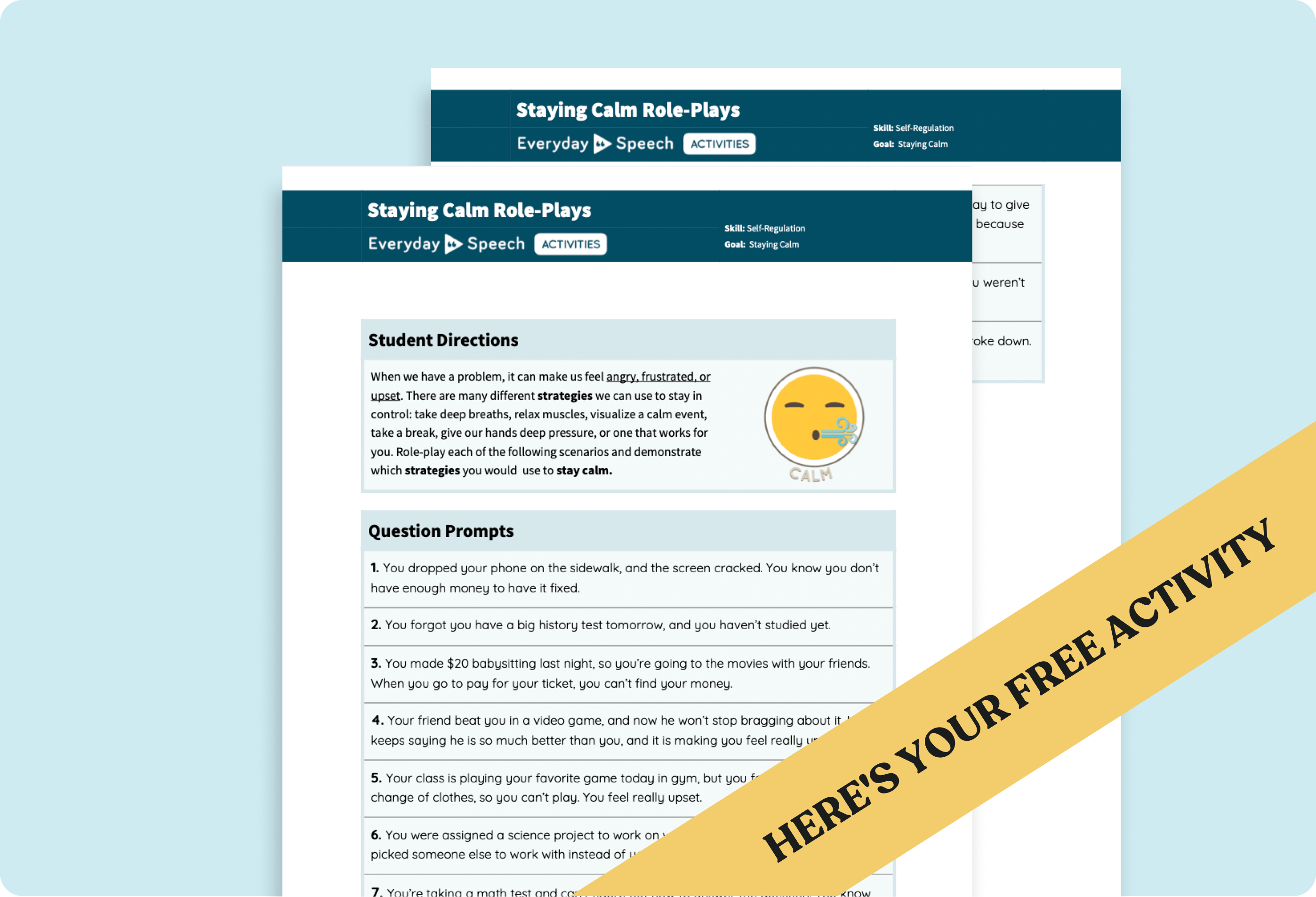
This no-prep resource presents realistic, emotionally charged scenarios that students can act out to practice calming strategies. It helps students identify triggers, apply coping tools, and reflect on their responses in a safe, supportive setting.
How to use it: Use in small groups or pairs. Assign roles, guide students in applying a calming strategy during the scenario, and facilitate discussion afterward.
Staying Calm Goal Poster

This visual tool breaks down simple steps students can follow to stay calm during stressful moments. The poster emphasizes techniques such as deep breathing, positive self-talk, and goal-setting, supporting independence and resilience.
How to use it: Display in classrooms or counseling spaces. Refer to it during discussions about managing emotions, and encourage students to set personal calm goals.
Self-Controller Scanner Goal Poster

This poster guides students through pausing, checking their “controller,” setting a goal, and choosing a strategy before reacting in challenging situations. It encourages metacognition and empowers students to make thoughtful choices.
How to use it: Use during morning check-ins, transitions, or as part of individual coaching. Pair with role-play or reflection activities to build mastery.
Self-Regulation Activities for High School
Keeping Your Self-Control

This no-prep worksheet invites students to reflect on challenging situations and plan how to pause, access coping strategies, and respond thoughtfully. The activity builds emotional awareness and decision-making skills.
How to use it: Use during counseling sessions or advisory periods. Have students complete the worksheet individually, then discuss strategies in pairs or groups.
Thinking About Others Goal Poster

Originally designed for younger students, this poster can be adapted for teens to support calm, respectful responses in emotionally charged situations. It encourages perspective-taking and helps students reflect on the impact of their actions.
How to use it: Use as a visual anchor during group discussions, restorative circles, or individual coaching. Invite students to set personal calm goals based on the poster’s steps.
Staying Calm Spinner

This interactive tool provides realistic scenarios that prompt students to identify calming strategies they could use in each situation. It builds flexibility and problem-solving skills through peer discussion.
How to use it: Use in small groups or counseling sessions. Have students take turns spinning, responding, and sharing their strategies, then facilitate a group reflection.
Helpful and Unhelpful Strategies

This hands-on sorting activity guides students to categorize common coping strategies as helpful or unhelpful, promoting self-awareness and reflection. It supports students in choosing positive approaches during stress.
How to use it: Use in pairs or small groups. After sorting, lead a discussion on why certain strategies are more effective and how to apply them in daily life.
Switching Tracks: Handling Changes

This printable resource helps students build flexibility by practicing how to shift smoothly from one task, plan, or mindset to another. It focuses on strategies for handling unexpected changes with resilience and calm.
How to use it: Use during advisory, life skills classes, or counseling sessions. Guide students in applying the steps to real-life scenarios and setting personal goals for managing transitions.
Using Our Self-Controller at the Holidays

This printable activity helps students identify emotional triggers common during the holiday season and match them with positive coping strategies. It reinforces self-regulation skills in real-world contexts where routines may be disrupted and emotions run high.
How to use it: Use in individual sessions, small groups, or as a classroom station. Guide students in pairing holiday scenarios with self-control strategies, and facilitate reflection or discussion.
Helping Students Build Lasting Self-Regulation Skills
Self-regulation takes practice, and every strategy above can start small. Pick one or two, practice them daily, and add more as students are ready. Download the free self-regulation toolkit.
FAQs About Self-Regulation
What are self-regulation skills?
Self-regulation skills are the abilities that help kids manage their emotions, attention, and behavior. They include naming feelings, pausing before reacting, calming the body, shifting focus, and solving problems.
What are signs that a child is struggling with self-regulation?
Common signs include frequent outbursts, trouble with transitions, impulsive behavior, and difficulty calming down after getting upset. Kids may also struggle to manage frustration during schoolwork or with peers.
What is the difference between self-regulation and self-control?
Self-control is stopping an impulse in the moment, like not interrupting. Self-regulation is broader: noticing feelings, understanding them, and managing them over time.
What are 5 coping strategies for kids?
Deep breathing, movement breaks, positive self-talk, a calm-down space, and naming feelings are five simple coping strategies kids can use anywhere. Teach them when students are calm so they’re ready when big feelings hit.
How can you help a child with ADHD self-regulate?
Keep strategies short, physical, and predictable. Movement breaks, visual timers, and breaking tasks into small steps tend to work best, along with plenty of adult modeling and practice.
What is the 3-3-3 rule for children?
The 3-3-3 rule is a quick grounding technique. Have the child name three things they see, three sounds they hear, and move three parts of their body. It’s a shorter version of the grounding strategy above.
How can teachers build self-regulation into the school day?
Build it into routines like morning meetings, emotion check-ins, and reflection time. Keep regulation tools within reach, and model your own strategies out loud.