Play This Compromising Game for Kids: Social Trivia


Social Trivia: Compromising
Support flexible thinking and teamwork with a points-based game that helps students practice compromising and problem-solving in real peer situations.
Helping students learn how to compromise can be one of the most challenging parts of building friendship and teamwork skills.
During group work or play, many students want things to go their way. When preferences clash, small disagreements can quickly turn into frustration or conflict, especially if students struggle to see another perspective. Compromising is not an instinctive skill for most kids. It requires flexible thinking, perspective taking, and the ability to give up part of what you want in order to keep a group moving forward.
Related resources: See our full list of social skills games.
For educators, teaching this skill can be difficult within limited instructional time. Simply telling students to compromise or reminding them to “take turns” often does not lead to meaningful change during real interactions with peers.
This is why structured practice matters. Students need opportunities to work through realistic situations, weigh different options, and talk about fair solutions with guidance and support.
Games can be an effective way to provide this kind of practice by creating low-pressure opportunities for decision making and discussion. In this post, we will look at what compromising looks like for kids, how to help students practice compromising with friends, and how a compromising game for kids can support this instruction in an engaging, practical way.
What Does Compromising Look Like for Kids?
Compromising for kids means being able to take turns, make trade-offs, and adjust their preferences so everyone involved can participate. It is not about giving up entirely or always letting someone else decide. Instead, it involves finding a solution that works for more than one person and helps the group move forward.
This skill shows up most often during everyday interactions with peers. Group work, games, and shared decisions with friends all require some level of compromise. For example, students may need to agree on which game to play, decide who takes on certain roles in a group, or resolve disagreements about rules. Without support, these situations can quickly become stuck or lead to conflict.
Effective compromising requires flexible thinking and an awareness of others’ needs. Students must consider different options, think about fairness, and be willing to adjust their original plan.
These skills do not develop through reminders alone. Kids need explicit instruction and repeated opportunities to practice compromising in realistic situations so they can apply these strategies during real friendships and group activities.
How to Help Students Practice Compromising With Friends
The goal of teaching compromising is to help students consider other people’s needs alongside their own. When kids learn to pause, listen, and weigh different options, they are more likely to find solutions that keep friendships and group activities moving forward.
An effective way to teach compromising is by using realistic peer situations that students recognize. When scenarios feel familiar, students are more engaged and willing to participate.
Guided practice is essential.
Students benefit from being asked to choose between options, explain their reasoning, and talk through what feels fair for everyone involved. These discussions help students understand that compromise often involves trade-offs rather than one “right” answer.
Games can support this instructional approach by providing structured choices and built-in opportunities for discussion. Instead of simply talking about compromise, students actively practice making decisions and hearing others’ perspectives.
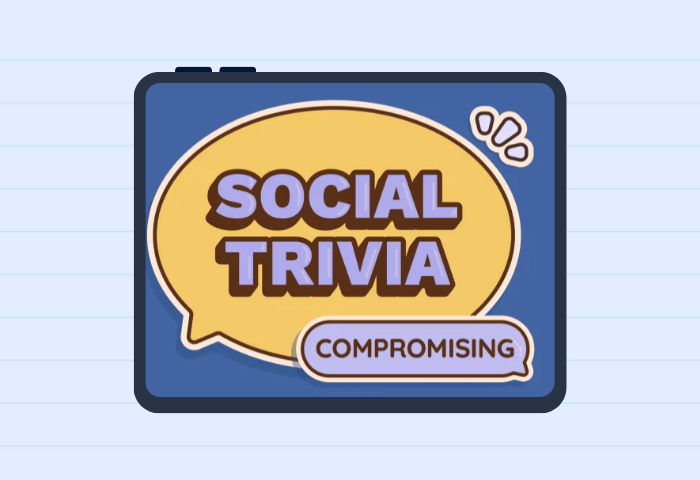
Social Trivia is a compromising game for kids that fits this model. It allows students to work through common friendship and group scenarios in a guided, points-based format and can be used easily in small groups, whole-class activities, or social skills instruction.
Why Games Are Effective for Teaching Compromising Skills
Many students understand that they are supposed to compromise, but struggle to do so in the moment. When preferences clash, emotions can take over and students may focus on getting their own way rather than considering other options. Without structure, group work and peer interactions can quickly break down.
Traditional approaches to teaching compromise often fall short. Talking about compromise or setting rules does not always help students apply the skill during real situations with peers. Compromising requires flexible thinking and decision making, which are difficult to develop without practice.
Games provide a more effective way to teach compromising by creating structured opportunities for choice and discussion. Students are asked to consider different options, listen to others, and work toward solutions in a low-pressure setting.
Because games mirror real social situations, they give students practice with compromise in a way that feels relevant and engaging. For educators, games also offer an efficient way to build compromising skills while keeping students motivated and involved.
How Social Trivia Helps Students Practice Compromising
Social Trivia is designed to give students guided practice with compromising in situations that feel familiar and relevant. Through points-based questions and scenarios, students are prompted to think about different options, consider others’ perspectives, and decide how to move forward in a way that works for the group.
This structure helps shift the focus away from winning or getting one’s own way and toward collaborative problem solving.
The game supports flexible thinking by encouraging students to weigh trade-offs and predict how different choices might affect others. As students discuss answers and hear multiple viewpoints, they practice perspective taking and learn that compromise often involves adjusting their initial preference. The collaborative format also reinforces teamwork, as students work together to earn points and move through the game.
Over time, this type of practice can improve how students participate in group activities and peer interactions. By repeatedly engaging in structured compromise during gameplay, students build confidence and skills that can transfer to real friendships, classroom discussions, and group work.
Teaching Compromising Skills With Games
Compromising is a skill students need to learn, practice, and revisit over time. Without explicit instruction, many kids struggle to balance their own preferences with the needs of others during group work and friendships. Providing structured opportunities to practice compromise helps students develop flexible thinking and stronger peer relationships.
Social Trivia offers a practical, no-prep way to support this instruction. The game gives students repeated opportunities to weigh options, listen to others, and work toward fair solutions in a guided, engaging format.
Play Social Trivia: Compromising to give students meaningful practice with compromise, and explore additional compromising and friendship skills resources to continue building these skills across settings.e with solving problems with friends, and explore additional problem-solving and friendship skills resources to continue building these skills across sessions.