Play This Free Self-Regulation Game With Students: Selby Says


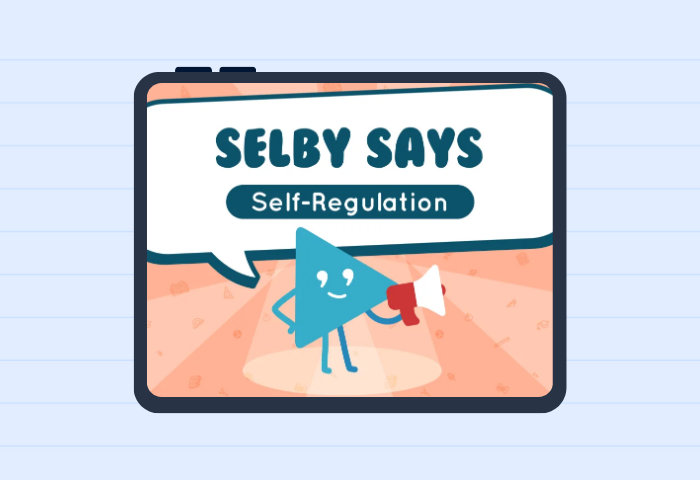
Selby Says: Self-Regulation
Get students up and moving while they practice self-regulation, listening, and impulse control with this no-prep game designed for real classroom and therapy use.
Helping students build self-regulation skills can be one of the most challenging parts of the school day.
Many students have difficulties with impulse control and staying regulated, especially during transitions, group activities, or high-energy moments. Even when expectations are clear, applying self-regulation strategies in the moment does not come easily for many learners.
Self-regulation is not just about knowing the rules. It requires students to check in with their bodies, manage their attention, and respond appropriately to cues from adults and peers. For educators, finding time to explicitly teach and practice these skills can be difficult, particularly when regulation challenges interrupt instruction or routines throughout the day.
This is why structured, active practice matters. When students are given repeated opportunities to practice self-regulation in real time, they are better able to pause, listen, and adjust their behavior as situations change.
In this post, we will look at what self-regulation looks like for students, how to help students practice these skills effectively, and how a free self-regulation game can support this instruction in a practical, no-prep way.
What Does Self-Regulation Look Like for Students?
Self-regulation is the ability to control impulses, listen and follow directions, and start or stop actions when asked. For students, this means being able to pause their bodies, focus their attention, and respond appropriately to cues from adults and peers, even when emotions or energy levels are high.
Regulation challenges tend to show up during parts of the day that require flexibility and control. Transitions, group activities, and high-energy or unstructured moments are common times when students struggle to stay regulated. These situations often demand quick shifts in behavior, which can be difficult without support.
In practice, self-regulation difficulties might look like moving when asked to stay still, acting before listening to directions, or having trouble stopping an activity once it has started. These behaviors are not signs that students do not know the expectations. Instead, they reflect a need for more structured opportunities to practice regulation skills.
Self-regulation requires repeated practice in real situations where students can learn to manage their bodies and attention in the moment. Reminders alone are not enough to build these skills. Students need intentional instruction and opportunities to practice self-regulation as part of everyday routines.
How to Help Students Practice Self-Regulation
The goal of self-regulation instruction is to help students pause, listen, and control their bodies in the moment. When students are given consistent opportunities to practice these skills, they are better able to respond to expectations and adjust their behavior as situations change throughout the day.
An effective approach to teaching self-regulation includes setting explicit expectations, using clear start-and-stop cues, and providing repeated opportunities for practice. Students benefit when expectations are predictable and when they know exactly when to begin, stop, or change an action. Repetition helps these skills become more automatic over time.
Movement-based practice is especially effective for building self-regulation. Movement helps students stay engaged while practicing self-regulation, making regulation visible and concrete for students.
It also supports impulse control in real time, allowing students to practice stopping, starting, and listening as part of the activity rather than talking about these skills after the fact.
Selby Says is a self-regulation game that fits this instructional approach. It gives students structured opportunities to listen carefully, move their bodies, and respond to cues in a guided format. The game can be used flexibly in small groups, whole-class activities, or during transitions and regulation resets.
Why Games Are Effective for Teaching Self-Regulation
Many students understand behavioral expectations but struggle to apply them in the moment. During transitions, group activities, or high-energy times, regulation breaks are often reactive and lack structure, which makes it harder for students to build lasting self-regulation skills.
Traditional approaches to teaching self-regulation can fall short for this reason. Worksheets do not address body control, and verbal reminders alone do not build impulse control or listening skills. Without opportunities to practice regulation in real time, students may know what is expected but still struggle to manage their bodies and attention when it matters most.
Games offer a more effective way to teach self-regulation by providing active participation and immediate feedback. Students are asked to stop, start, listen, and respond as part of the activity itself, which allows them to practice regulation skills in the moment. This real-time practice helps students connect expectations to actions in a meaningful way.
For educators, games also offer an efficient and engaging way to support self-regulation. They provide built-in structure, keep students motivated, and make it easier to incorporate meaningful regulation practice into daily routines.
How Selby Says Helps Students Build Self-Regulation Skills
Selby Says is designed to help students build self-regulation skills through structured listening and movement. The game supports impulse control by asking students to wait, listen carefully, and respond only when appropriate. This repeated practice helps students strengthen their ability to pause and think before acting.
The game also targets listening and attention. Students must focus on directions, track cues, and adjust their actions in response. Because movement is built into the activity, students are actively engaged while practicing body awareness and control at the same time.
Selby Says provides clear directions, structured movement, and built-in start-and-stop cues that make expectations easy for students to follow. This combination of movement and structure allows students to practice regulating their bodies in a predictable, supportive way.
Over time, this type of practice can lead to improved regulation during group activities and smoother transitions throughout the day. As students become more familiar with controlling their actions and responding to cues, they are better able to stay focused and regulated across classroom routines.
Teaching Self-Regulation With Movement-Based Games
Self-regulation is a skill that must be explicitly taught and practiced over time. Without intentional instruction, many students struggle to manage their bodies, attention, and impulses during everyday classroom routines. Providing structured opportunities to practice self-regulation helps students build confidence and respond more effectively in the moment.
Selby Says offers a simple, no-prep, and free way to support this instruction. The movement-based format allows students to practice listening, impulse control, and body awareness in real time.
Play Selby Says to give students meaningful self-regulation practice, and explore additional self-regulation, impulse control, and listening resources to continue building these skills across settings.