Play This Digital Citizenship Game for Middle and High School: Escaping Cyber City


Escaping Cyber City: Digital Citizenship
Guide middle and high school students through online safety, digital identity protection, scam awareness, and empathetic interaction with this interactive adventure game.
Helping middle and high school students use online spaces safely and responsibly is an ongoing challenge for educators.
Students are constantly making decisions online, from what to share and who to interact with, to how to respond in digital conflicts. Without guidance and practice, these choices can lead to misunderstandings, safety risks, or long-term consequences.
Related resources: See our full list of social skills games.
Digital citizenship is more than knowing the rules of the internet. It requires students to think critically, recognize potential risks, and consider how their actions affect themselves and others. For educators, teaching these skills can feel overwhelming.
Online situations change quickly, which makes it difficult to create meaningful practice opportunities that feel realistic and relevant to students’ experiences. This is why interactive, scenario-based practice matters.
When students are given opportunities to work through realistic digital situations, reflect on possible outcomes, and make informed choices, they are better prepared to handle similar situations on their own.
In this post, we will explore what digital citizenship looks like for middle and high school students, how to help students practice responsible digital decision-making, and how a digital citizenship game can support this instruction in an engaging, practical way.
What Does Digital Citizenship Look Like for Middle and High School Students?
Digital citizenship for middle and high school students involves making safe, responsible, and respectful choices when interacting online. This includes protecting personal information, recognizing potential risks, and considering how online actions can affect others. As students spend more time using digital platforms, these skills become increasingly important.
Digital citizenship skills are used across many online settings. Social media, online gaming, messaging apps, and school-based platforms all require students to manage interactions thoughtfully. Students may need to decide what information is appropriate to share, identify suspicious messages or scams, or respond appropriately to online conflict or peer pressure.
Effective digital citizenship also requires critical thinking. Students must pause and evaluate situations before reacting, especially when emotions or social pressure are involved.These skills do not develop through reminders or one-time lessons alone. Students need explicit instruction and guided practice in realistic situations.
How to Help Students Practice Digital Citizenship Skills
The goal of teaching digital citizenship is to help students think through online choices before acting. When students are supported in slowing down and evaluating their options, they are better equipped to make decisions that protect their safety and digital identity.
An effective approach includes using realistic online scenarios that reflect situations students may actually encounter. Discussing possible consequences and encouraging reflection helps students understand how their choices can impact themselves and others.
Games can support this instructional approach by creating structured opportunities to practice decision-making in a safe environment. Escaping Cyber City is a digital citizenship game that fits this model. It allows students to work through common online challenges, consider different outcomes, and practice responsible behavior in a fun, interactive format.
The game can be used in middle and high school instruction, advisory periods, counseling sessions, or small group settings.
Why Games Are Effective for Teaching Digital Citizenship
Teaching digital citizenship can be challenging because online risks and situations change constantly. Students often encounter new problems before they have had a chance to practice how to respond. Without structure, it can be difficult for students to apply general rules to specific online situations.
Traditional approaches to teaching digital citizenship often rely on one-time lessons or abstract guidelines. While these can raise awareness, they do not always help students apply skills when real decisions need to be made. Students benefit from opportunities to actively engage with realistic scenarios rather than passively receiving information.
Games offer an effective solution by providing interactive, scenario-based practice. Students make choices, see the outcomes of those choices, and reflect on what worked and what did not.
This allows students to practice digital citizenship skills without real-world consequences. For educators, games also provide an engaging and efficient way to build these skills within limited instructional time.
How Escaping Cyber City Helps Students Practice Digital Citizenship
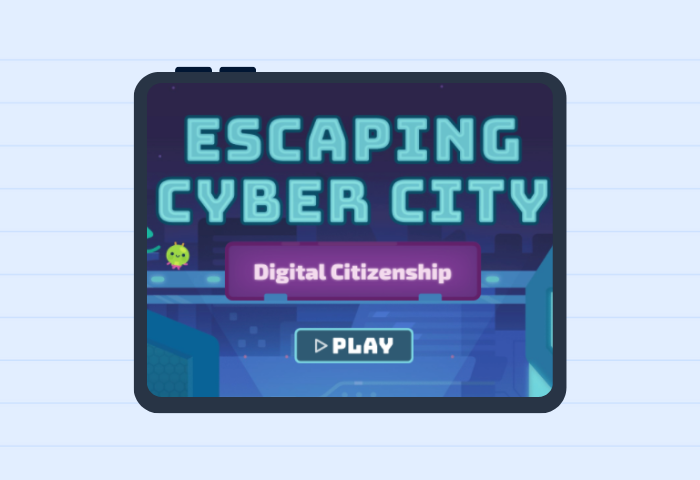
Escaping Cyber City is designed to help students practice digital citizenship through guided, decision-based gameplay. As students play the game, they are prompted to think critically about online safety, digital identity, and responsible behavior.
Each scenario encourages students to consider the potential consequences of their actions before moving forward. The game supports key digital citizenship skills, including recognizing scams, protecting personal information, and responding appropriately in online interactions.
The video-game style format keeps students engaged while reinforcing cause-and-effect relationships in a clear, structured way.
By practicing these skills in a safe environment, students gain confidence in their ability to make responsible digital choices. Over time, this practice can lead to improved awareness and more thoughtful behavior across online platforms and digital interactions.
Teaching Digital Citizenship With Games
Digital citizenship is a skill that must be explicitly taught and practiced. Without guided instruction, many students struggle to apply safety and responsibility skills when faced with real digital challenges.
Escaping Cyber City offers a practical, no-prep way to support digital citizenship instruction for middle and high school students. By providing realistic scenarios and guided decision-making, the game helps students build skills they can apply beyond the classroom.
Play Escaping Cyber City to give students meaningful practice with digital citizenship, and explore additional online safety and responsible technology use resources to continue supporting these skills across settings.