

Self-Monitoring for Teens: Learning to Self-Monitor
This session teaches self-monitoring strategies for students, helping them notice where their attention and effort are going and adjust before things slip. They explore why checking in with themselves supports success, discuss two students who handle a drifting mind in different ways, and play a quick game that asks them to weigh a situation and decide whether a response fits. The takeaway: small check-ins help them stay on track.

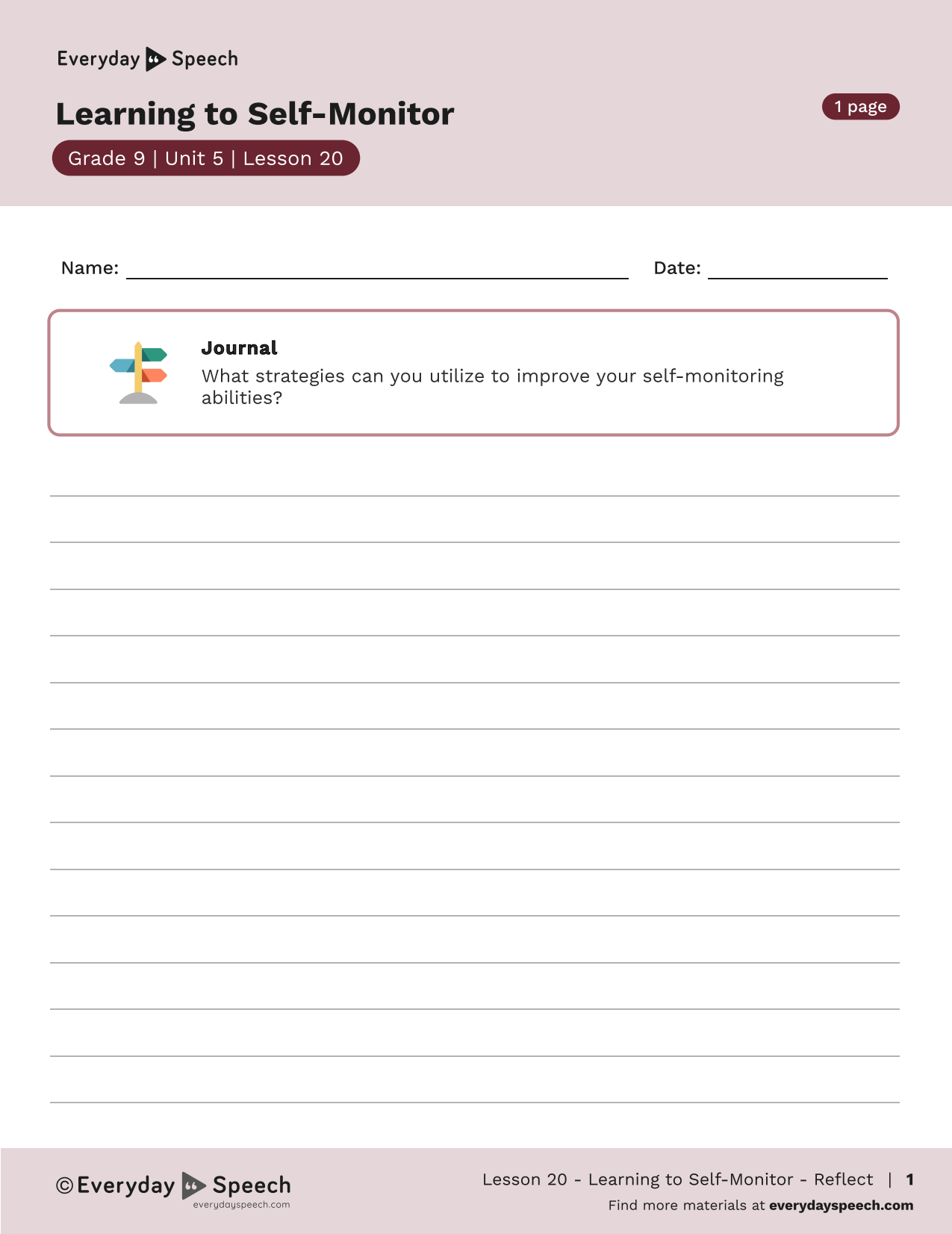 Extension activity
- Skill
- Self-Regulation
- Goal
- Executive Functioning
- Grade level
- Middle & High School
Get everything you need to teach the skill
These materials are part of a no-prep session designed by our clinical team, with all the structure, scaffolding, and support you need to teach included.
Engaging materials
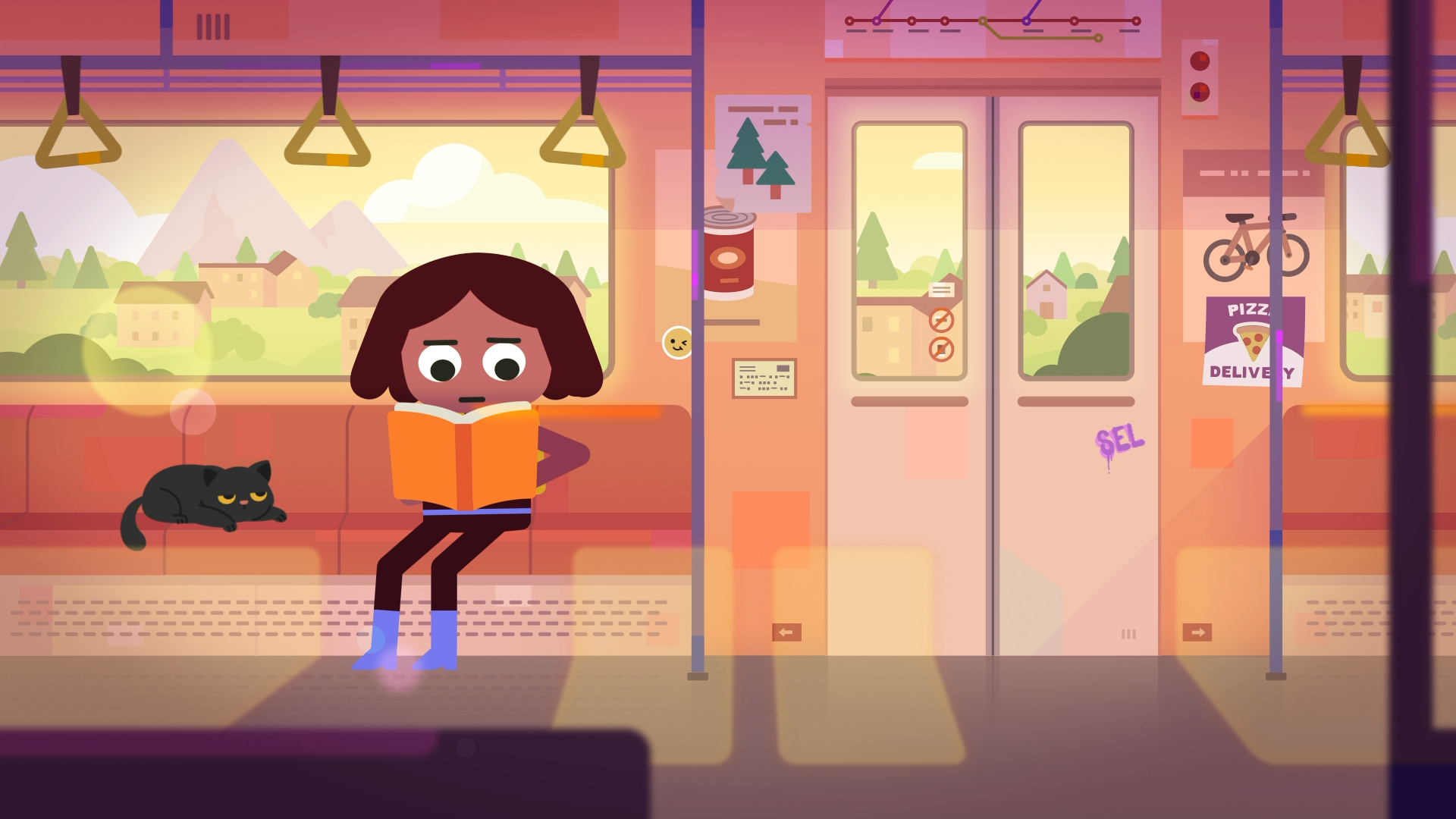 Video lesson
Learning to Self-Monitor
In this video lesson, students learn how to self-monitor their attention and behavior by identifying trouble spots, setting a goal, choosing a way to track progress, and scheduling check-ins, then practice a body scan.
- Extension activity
Learning to Self-Monitor Journal
In this journal activity, students identify strategies they can use to improve their self-monitoring skills, thinking about how they will check in on their own progress and behavior.
Plus everything you need to teach them
Warm-up
- Video: 4-7-8 Breathing2:13
- Video: Obstacles into Opportunities Visualization1:19
- Video: Yoga Pose Library
Session Opener
Guiding Question: Why does self-monitoring help a person succeed?
Practice
- Discussion Question
- Role-Play Activity
- Mini Game
How to use it with your students
- 1Watch Play the video lesson so students see the skill in action.
- 2Practice Try the skill together with a discussion prompt, role-play, or mini game.
- 3Extend Use the extension activity to help students carry the skill further.
What's Covered
In this lesson, students learned how to self-monitor by noticing their own actions and how their surroundings affect their focus and behavior. They practiced checking in with themselves by asking what was going well and what needed work, then choosing a strategy to adjust. They worked on this because catching when their attention drifts helps them refocus and stay on track in any setting.
Key Terms
- Self-Monitoring
- Checking in with yourself during a situation by silently asking how you feel and how you are acting. This helps you notice and adjust in the moment.
- Self-Evaluation
- Checking in on what you're doing and asking yourself what's going well and what needs work. It makes you aware when you've drifted off or need to adjust.

Sample IEP Goal This Session Supports
-
Executive Functioning
Given a multi-step task, learner will use at least one self-selected organizational strategy (e.g., visual planner, breaking the task into steps, visual timer) to initiate and work through the task with decreasing adult support in 4 out of 5 opportunities independently/given X prompt(s).
Send this tip home to support generalization
At home or in the classroom, when a student seems to lose focus, try asking them to name one thing going well and one thing they want to adjust right now. A quick self-check helps them notice and reset on their own.
Ready to teach Learning to Self-Monitor?
Get the video, activity and discussion materials with zero prep.
Get These Materials Free
More Self-Regulation Activities
Frequently asked questions
Is this intervention free?
Yes, this ready-to-teach session on Learning to Self-Monitor is free. You can access this intervention free for 14 days through the Everyday Speech Session Library. Every user gets three free sessions, but you can get more or extend your access by sharing the Session Library with friends and colleagues.
What ages is this for?
These materials are designed for middle and high school students.
What's included?
You'll get access to your choice of warm-up videos, a session opener, a core material on Learning to Self-Monitor, three practice prompts, and an extension activity, Learning to Self-Monitor Journal.
What skill does this intervention teach?
This ready-to-teach session is on self-regulation - more specifically, executive functioning.
Get access to the full curriculum
A no-prep social skills curriculum with a full scope and sequence that builds student skills over time. MTSS-aligned across every tier, with 400+ whole class lessons and 800+ ready-to-teach sessions.
Start a 30-Day Free Trial
