

Coping Skills for Kids: Handling Embarrassment
This session teaches coping skills for kids, helping students handle feeling embarrassed after a small mistake, like being told they have food on their face. Through a short video, a discussion about positive self-talk, and a quick game where they finish open-ended sentences in their own way, they practice noticing a big reaction and switching to kinder thoughts. The takeaway: a small moment does not have to feel like a big deal.

 Extension activity
- Skill
- Emotional Recognition
- Goal
- Changing the Channel on Feelings
- Grade level
- Elementary School
Get everything you need to teach the skill
These materials are part of a no-prep session designed by our clinical team, with all the structure, scaffolding, and support you need to teach included.
Engaging materials
 Video modeling lesson
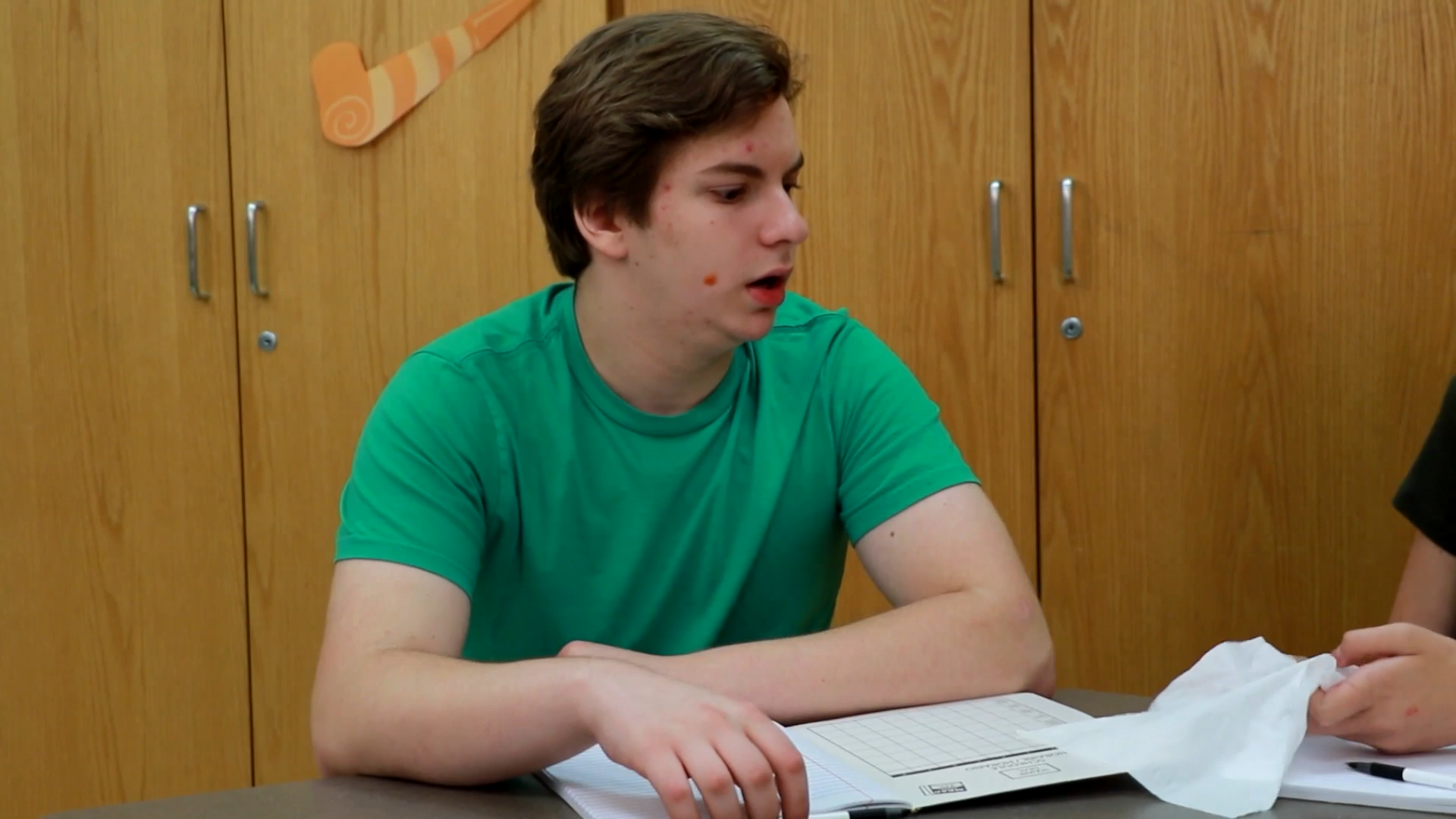
Handling Embarrassment
When Alessandra points out to Tim that he has some food on his face, Tim gets very upset. Alessandra is confused by his reaction - she doesn't think it's a big deal. When Tim tries again, he realizes it isn't a big deal and uses positive self-talk to make himself feel better.
- Extension activity
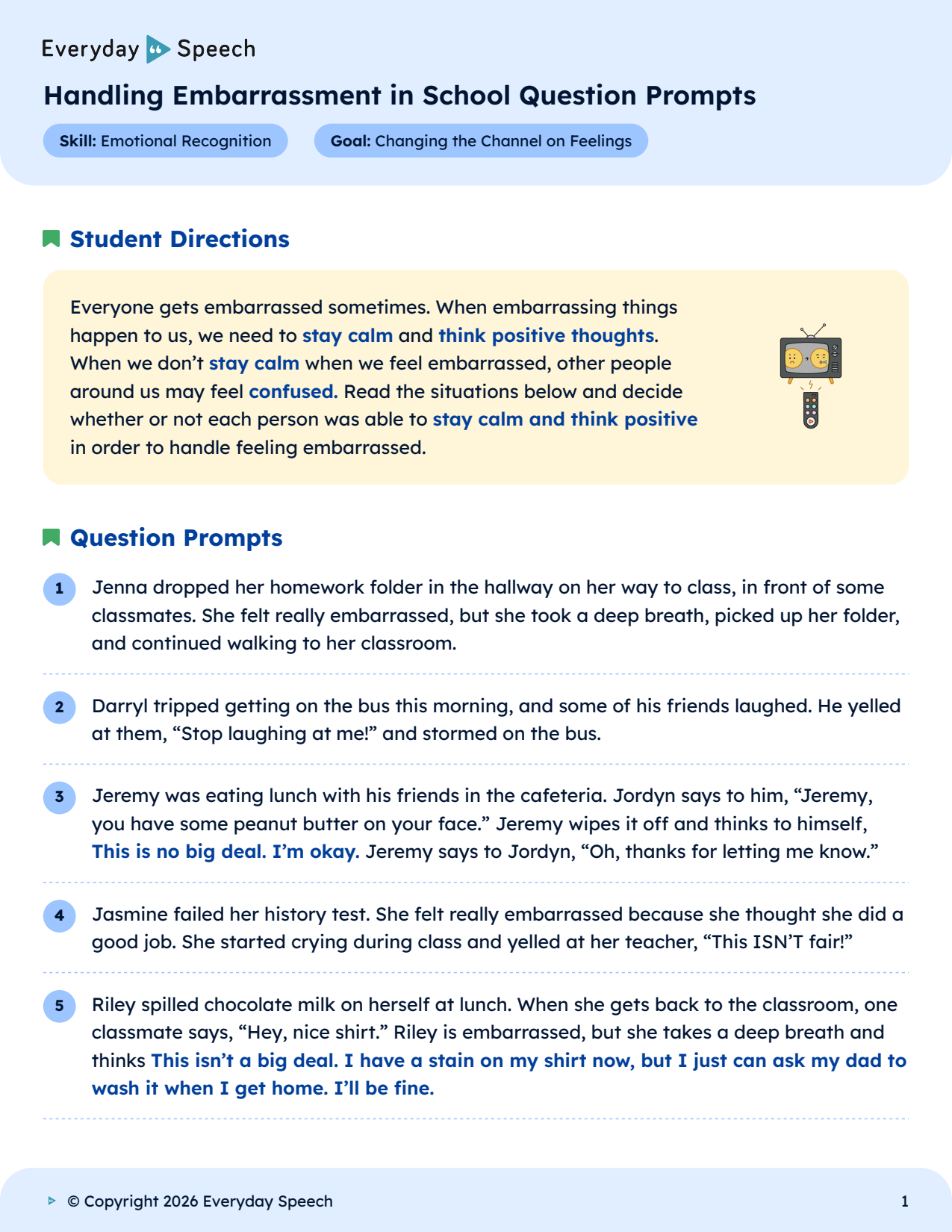
Handling Embarrassment in School Question Prompts
In this prompt activity, students read school scenarios involving embarrassment and decide whether each person stayed calm and using a positive coping strategy.
Plus everything you need to teach them
Warm-up
- Video: Hot Cocoa Breathing2:05
- Video: Daily Intention2:59
- Video: Body Squeeze2:12
Session Opener
Guiding Question: How can a person handle feeling embarrassed?
Practice
- Discussion Question
- Role-Play Activity
- Mini Game
How to use it with your students
- 1Watch Play the video modeling lesson so students see the skill in action.
- 2Practice Try the skill together with a discussion prompt, role-play, or mini game.
- 3Extend Use the extension activity to help students carry the skill further.
What's Covered
In this lesson, students learned that everyone feels embarrassed sometimes and that a deep breath plus positive self-talk can help an embarrassing moment feel smaller. They practiced noticing the feeling and repeating a steady phrase like "I'm okay" to feel ready again.
Key Terms
- Positive Self-Talk
- Positive self-talk means using kind words in your head when something feels upsetting or hard. You might say phrases like “I can do this,” or “I’m okay” to help your body feel calmer and think more clearly.
- Embarrassment
- Embarrassment is the uncomfortable feeling you get when you make a mistake in front of other people. Your face might feel warm, and the feeling usually passes after a little while.

Sample IEP Goal This Session Supports
-
Changing the Channel on Feelings
When experiencing strong emotions such as jealousy, disappointment, frustration, or embarrassment, learner will use a self-selected coping strategy (e.g., taking a break, positive self-talk, deep breaths) to manage the feeling and return to the task or interaction in 4 out of 5 opportunities independently/given X prompt(s).
Send this tip home to support generalization
At home or in the classroom, when a student makes a small mistake, try offering a phrase they can repeat to themselves, like "It's okay, this happens to everyone." Naming the moment as normal helps the feeling pass sooner.
Ready to teach Handling Embarrassment?
Get the video, activity and discussion materials with zero prep.
Get These Materials Free
More Emotional Recognition Activities
Frequently asked questions
Is this intervention free?
Yes, this ready-to-teach session on Handling Embarrassment is free. You can access this intervention free for 14 days through the Everyday Speech Session Library. Every user gets three free sessions, but you can get more or extend your access by sharing the Session Library with friends and colleagues.
What ages is this for?
These materials are designed for elementary school students.
What's included?
You'll get access to your choice of warm-up videos, a session opener, a core material on Handling Embarrassment, three practice prompts, and an extension activity, Handling Embarrassment in School Question Prompts.
What skill does this intervention teach?
This ready-to-teach session is on emotional recognition - more specifically, changing the channel on feelings.
Get access to the full curriculum
A no-prep social skills curriculum with a full scope and sequence that builds student skills over time. MTSS-aligned across every tier, with 400+ whole class lessons and 800+ ready-to-teach sessions.
Start a 30-Day Free Trial
